
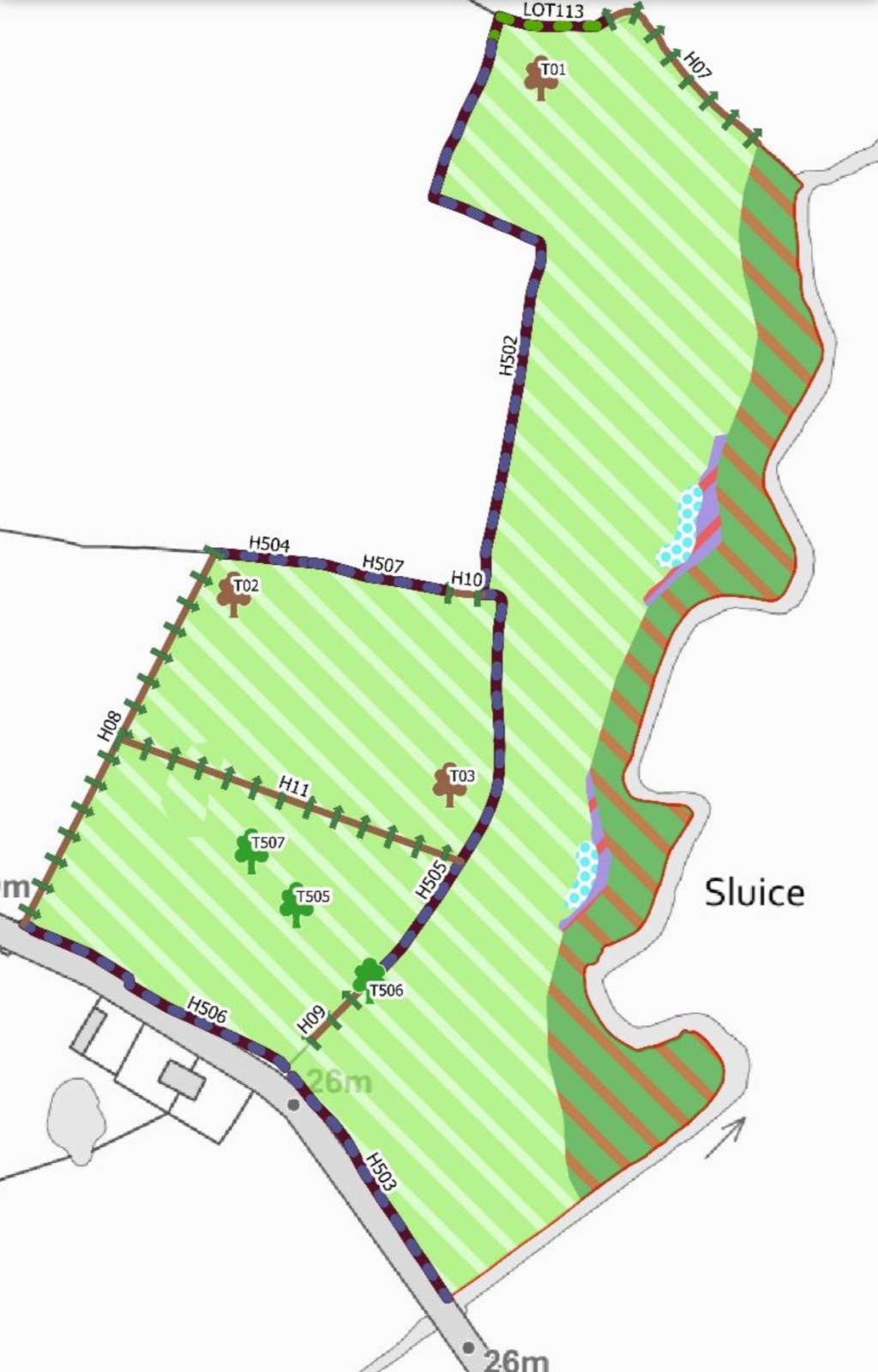
Is this the right piece of land to dedicate to nature recovery?
The Environment Act stipulates that only low grade agricultural land can be used for biodiversity schemes, to ensure that nationally we keep our most fertile and productive land for farming. We pass that test – our field is low grade and the survey finds it to be in poor condition. The strategic significance matters too. Does our land provide the opportunity to create priority habitat? What are the natural habitats around and are they connected? Creating good habitat that is isolated in the landscape won’t help us to achieve the resilient nature network that nature recovery requires. Our baseline report concludes that while the field has no statutory conservation designations, it is well located to serve as a ‘stepping stone’ in a landscape that has a lack of other areas of ecological significance and will ‘help connect other isolated areas of ecological importance’. It is adjacent to a biodiversity opportunity area, within a few hundred metres of ancient woodland, and the stream and hedgerows provide corridors for nature.
What kind of habitat should we create? The baseline report considers four scheme design options. Coming to a decision requires balancing a few different factors. How realistic and achievable is the target habitat? We undertook a soil survey as well as the walkover ecological surveys to help understand the potential. What species are in the area and what kind of habitat would be most beneficial? How would the scheme ‘score’ under the statutory biodiversity metric? We are not going to ruthlessly optimise against the metric if that comes at the expense of doing the right thing for nature but we do want to give ourselves a chance of generating enough units that we can do this all again. How challenging will the management regime be to achieve the target habitat? While most options will require relatively intensive work for a few years to establish, we do not want to end up with a highly intensive management regime in the long term. And are we working with the characteristics of the site? A significant part of which lies in the flood plain for the stream.
Balancing all these considerations we have concluded on option 4. A wet woodland bordering the stream, a lowland meadow through the rest of the field, about half a kilometre of additional hedgerow, a couple of ponds, and a few standard trees. This last doesn’t score on the metric, but I have always want to grow a few walnut trees. In all this will be about 3000 saplings to plant in the hedgerow and perhaps the same again in the woodland. This should help offset our lifetimes carbon footprint!
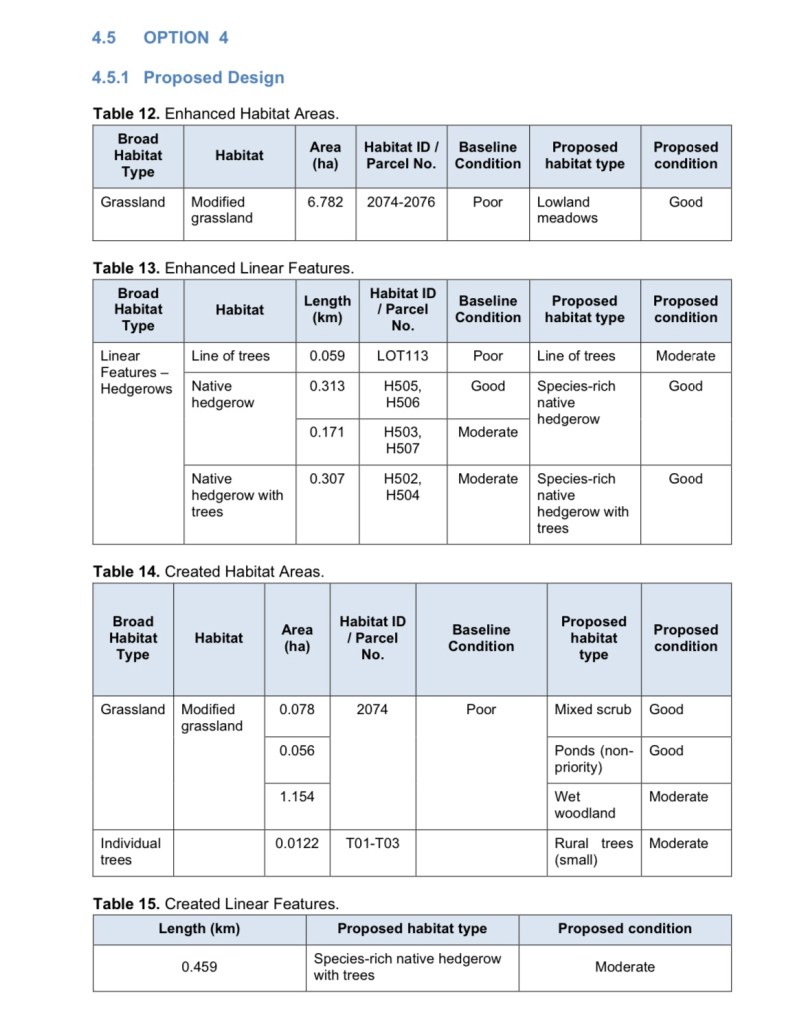
There are six bat roosts within a kilometre of the site, the stream, the scheme will offer forage, and further roosting opportunities in the woodland. The site will ‘greatly enhance the site for many of the bird assemblages’ present in the local area, from Turtle doves to Nightingales, Yellowhammer to Skylark. Amphibians and reptiles, invertebrates and small mammals foraging in the hedgerows or using the ponds. Most excitingly, the site could suit larger mammals including Otters.
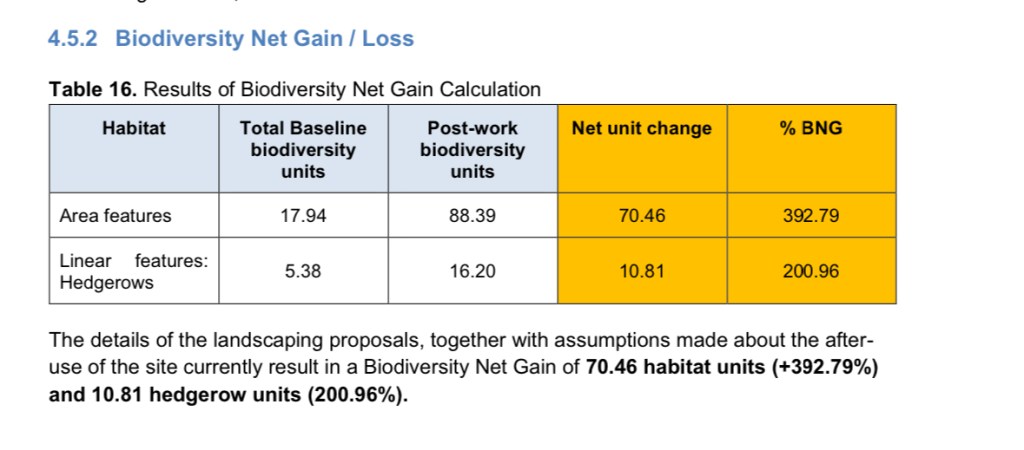
The next step is to finalise the ‘habitat management plan’ detailing what we need to do to realise the scheme and all these benefits for nature.
 Abounded
Leave a comment