
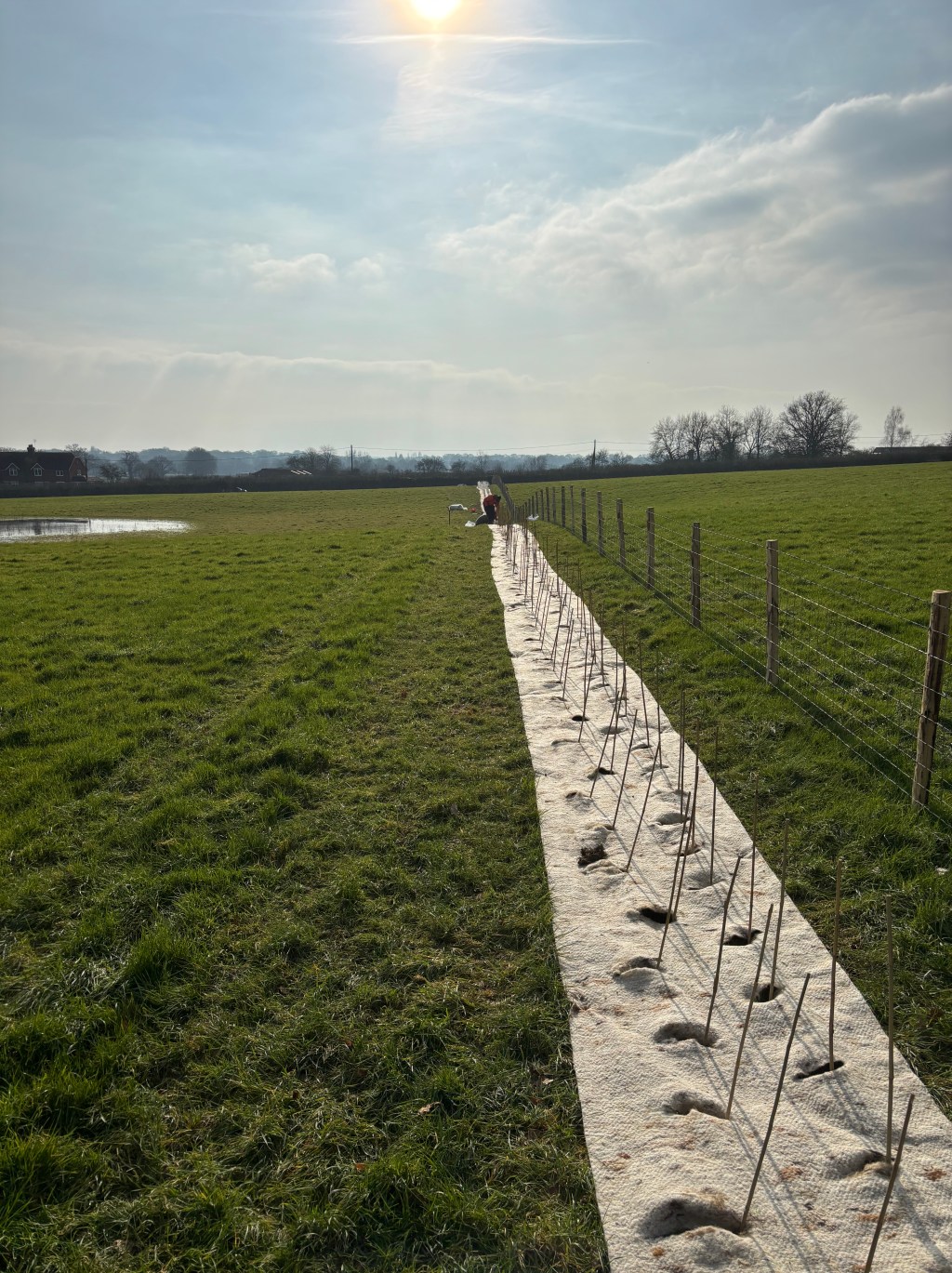
We have just finished day two of planting the new hedge. Now Dan and I are sitting back tired but happy with a beer in hand. More than a third, but less than a half of the new hedgerow is now planted. By the end of the week the hope is that we will have planted nearly 3000 saplings, finishing the hedgerow and also planting the first trees in the new woodland.
We have had friends and family helping out over the weekend. Jodie travelled back from University, Jessie and Yasmin coming to join too. Alex joined us directly after trampolining club. Sam, a Director of a local ecology firm stayed longer than expected because he enjoyed doing the habitat work so much compared to the day job which entails rather more paper work. Tomorrow we hope Tim and Bertie to join us. If you are about this week in Kent and want to plant some trees with us, then get in touch!
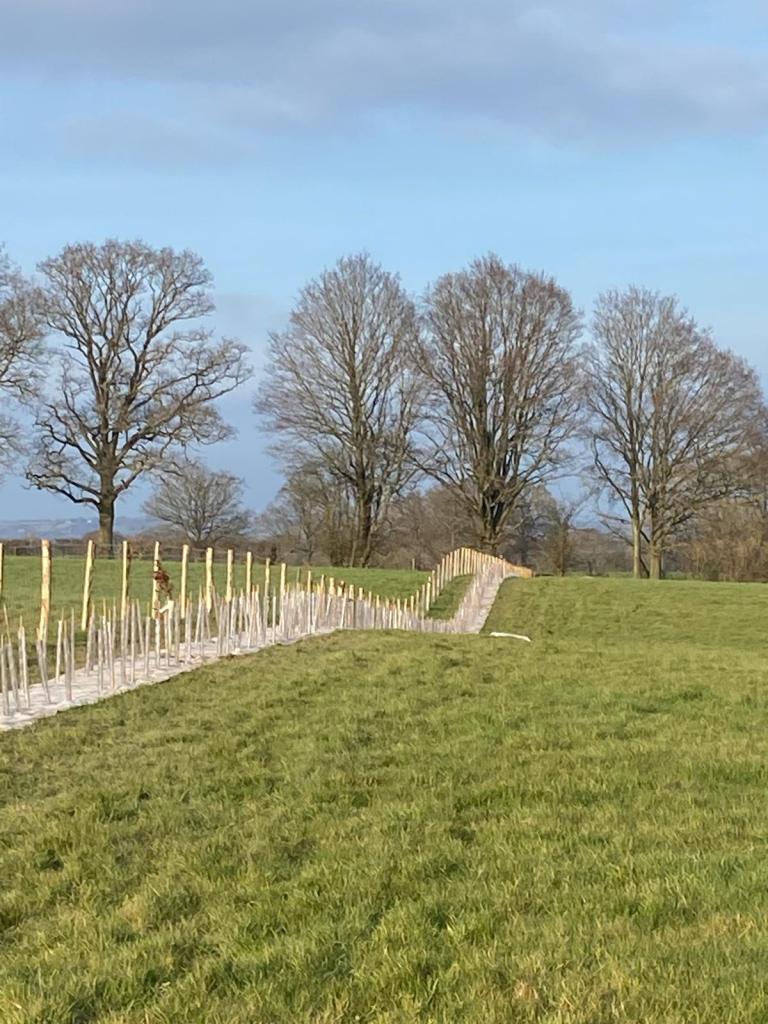
The hedge is a ‘species rich native hedgerow with trees’. Mostly hawthorn but with a mix of blackthorn, dogwood, field maple, hazel and a little bit of alder. Every ten metres or so there is a sapling that will be allowed to grow out to be all that it can be – a full sized tree. These are either beech, oak or field maple. After a bit of getting the hang of it, by the end of today we were in full production line mode. Laying the mulch mat, cutting slits, wiggling the tree spade to make a hole, dropping in the saplings and a bamboo cane, healing it in, and adding a spiral guard. And repeat. And repeat. In the cold.
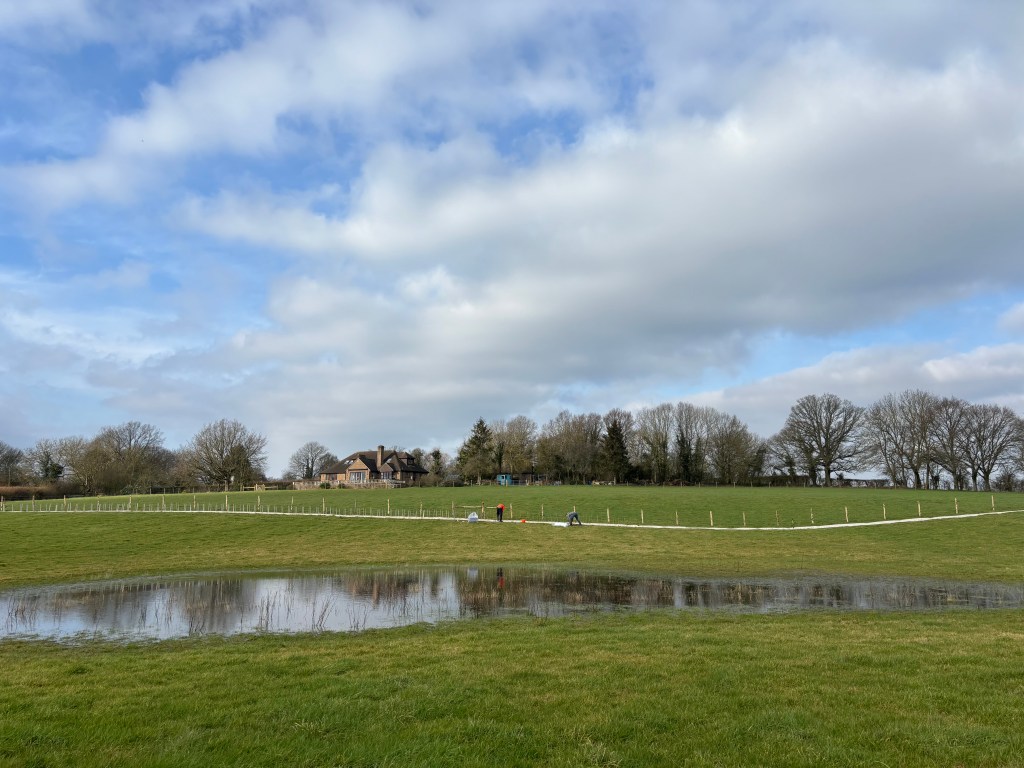
We have decided to use biodegradable mulch matting. This is made of wool and will keep down the weeds along the strip we have planted. The hope is that this will mean we can avoid using chemicals entirely, and there will be a lot less work to get the hedgerow established. It costs more to buy the matting than using a herbicide, however, while using a small quantity of chemicals in a controlled way would probably not cause any health or ecological harm doing so does not feel aligned with what we are doing. There would also be quite a lot more labour required. Spraying before planting and spraying again for the first five years while the saplings establish. If the mulch matting works then this should do most of the weed suppressing for us before eventually biodegrading into the soil. We are keen to try to achieve our nature goals without the use of pesticides. Thanks to the matting, our use to date remains at zero.
Today we discussed capturing data about the impact of Abounded. Recording how many trees we have planted seems a good start. Data that helps us improve also seems important. What will the survival rate of our saplings be? We also want to keep a record of all those that have given their time in the cause of nature recovery. I can see another page coming to this blog sometime soon. In the meantime, thanks to Jessie, Yasmin, Sam, Alex, Jodie for their help this weekend. I particularly liked the singing while you worked!
 Abounded
Leave a comment