
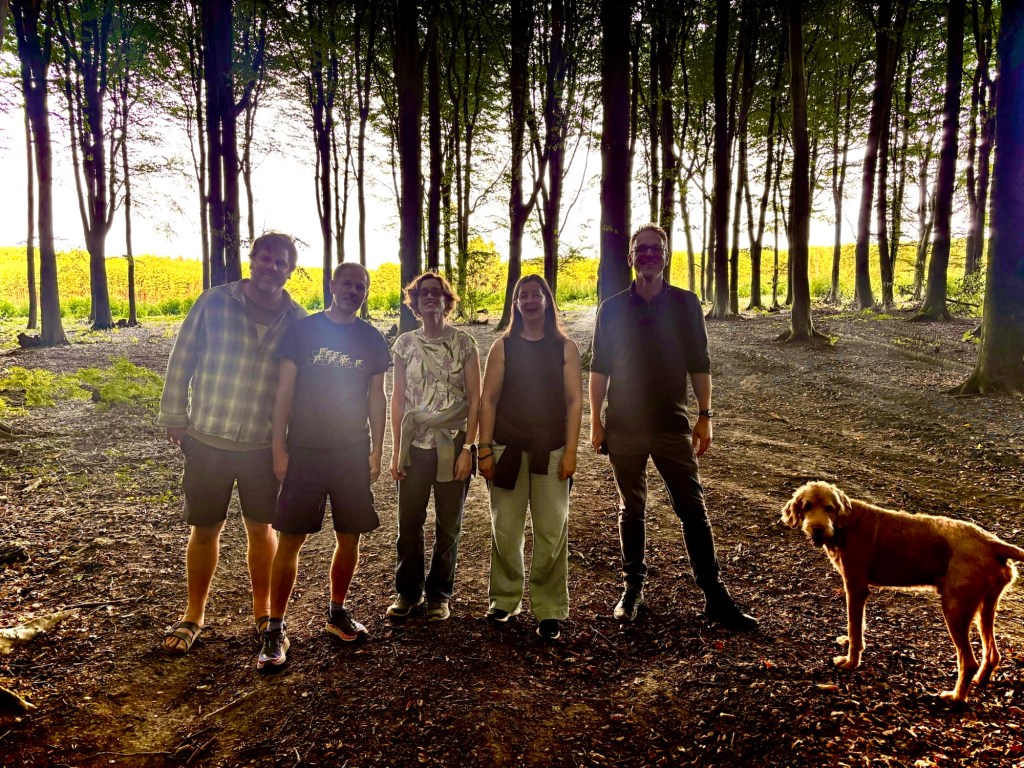
All five Abounded founders got together this weekend. Ben and Nikola are just back from a decade living in Africa and this was the first chance they have had to visit the field. It was satisfying to walk round with them and talk through the work that we have done over the winter. Seeing it through their eyes revealed just how much progress we have made. With them back living in the UK it is going to be a lot easier to be in the same place from now on and there will be more hands to help with further planting and pond digging.
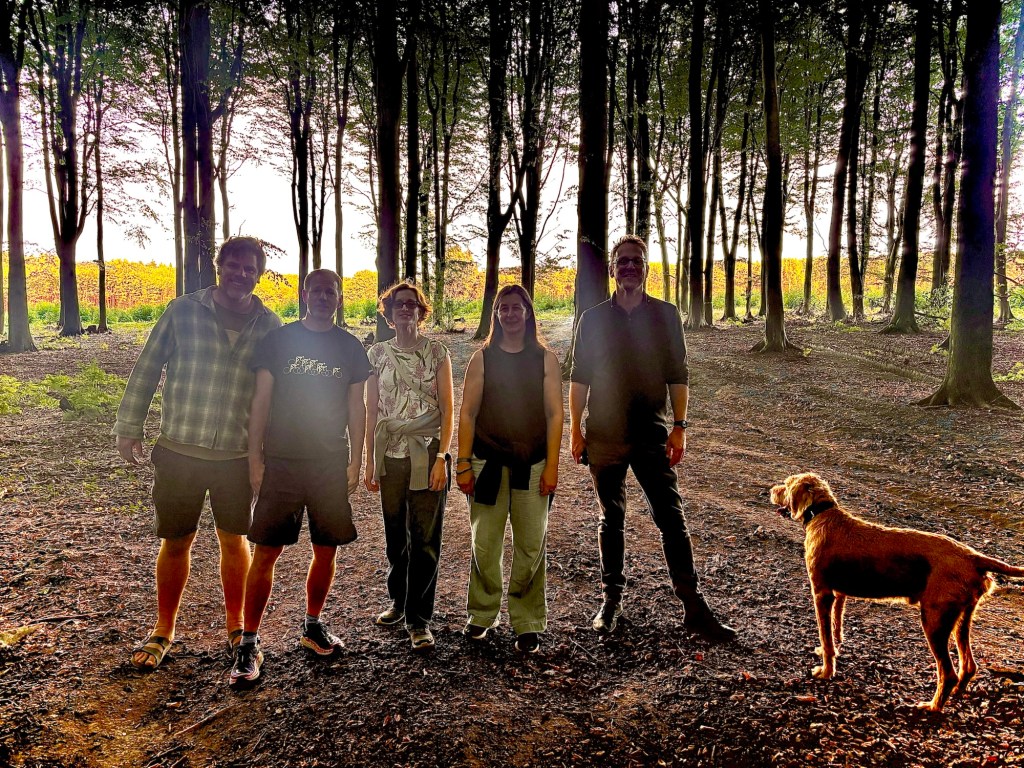
We continued our walk through the Kent countryside and talked through the next set of challenges for the project. We are struggling to get the Section 106 agreement with Tunbridge Wells Local Planning Authority (LPA) and there are a further set of minor changes needed to the scheme design.
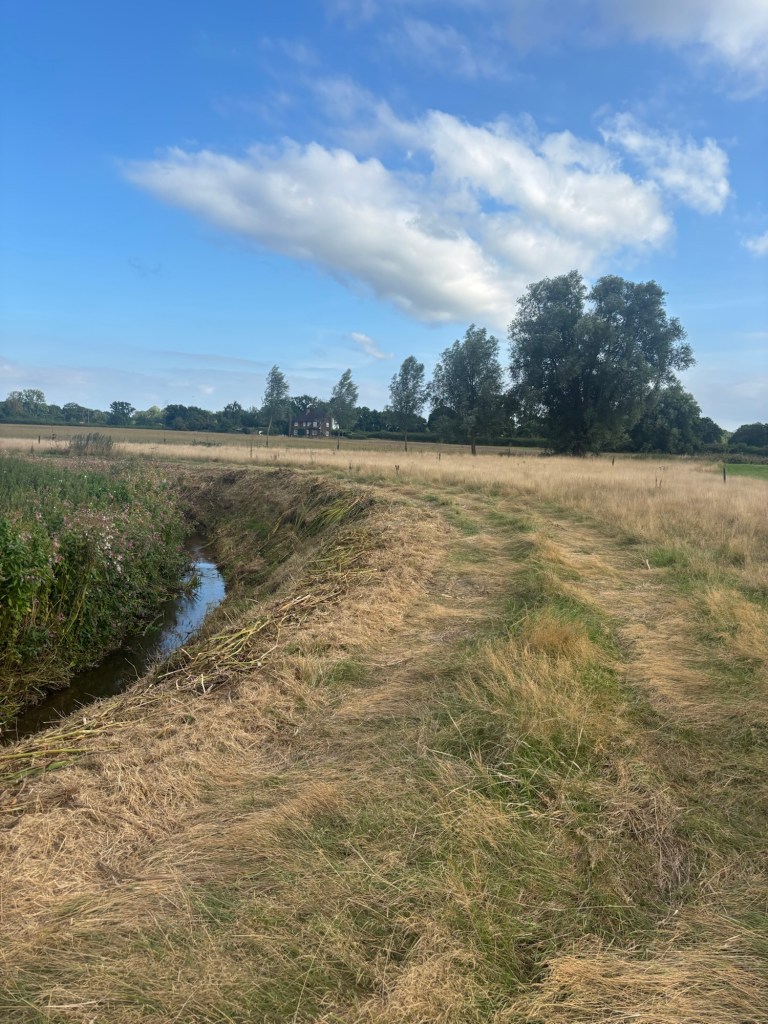
I had a call from the Drainage Board a couple of weeks ago. We had not realised that every year they cleared the banks of the stream that meanders along the side of our field. To do this , they need an access strip at least 5 metres wide at the top of the bank. Our woodland planting did not allow for this, so we will have to shift over the woodland, redraw the scheme design and transplant the few trees that we had planted too close to the bank. While we are updating the plan we will also make some other minor amendments to the mix of trees that we will plant and the fencing design. We will also make some changes to the structure to better align with the approach the LPA wants to take with the section 106 agreeement. This may help but there are a few other challenges with getting that over the line…
Getting a section 106 agreement with the LPA would allow us to register the biodiversity units from the project on the national register. So it is a critical step. We provided a draft based on the national template and then waited several months for a response. Recently we have finally received a draft agreement from the LPA which contains several principles that will not work for us. The LPA draft proposes: restricting the sale of biodiversity units to local developers only, that all funds from the sale of units are kept in a restricted fund for 30 years, and that we play a planning application fee based on our project being a ‘major development’. We now have to find out if we can find a section 106 agreement that works for everyone, or whether we need to explore an alternative route to registering biodiversity units. There is an alternative approach which is to work with a registered ‘responsible body’ and using a conservation covenant rather than a section 106 agreement. The paperwork is going to be the focus for the next couple of months, before the founders get together again for a working weekend in November.

 Abounded
Leave a comment