
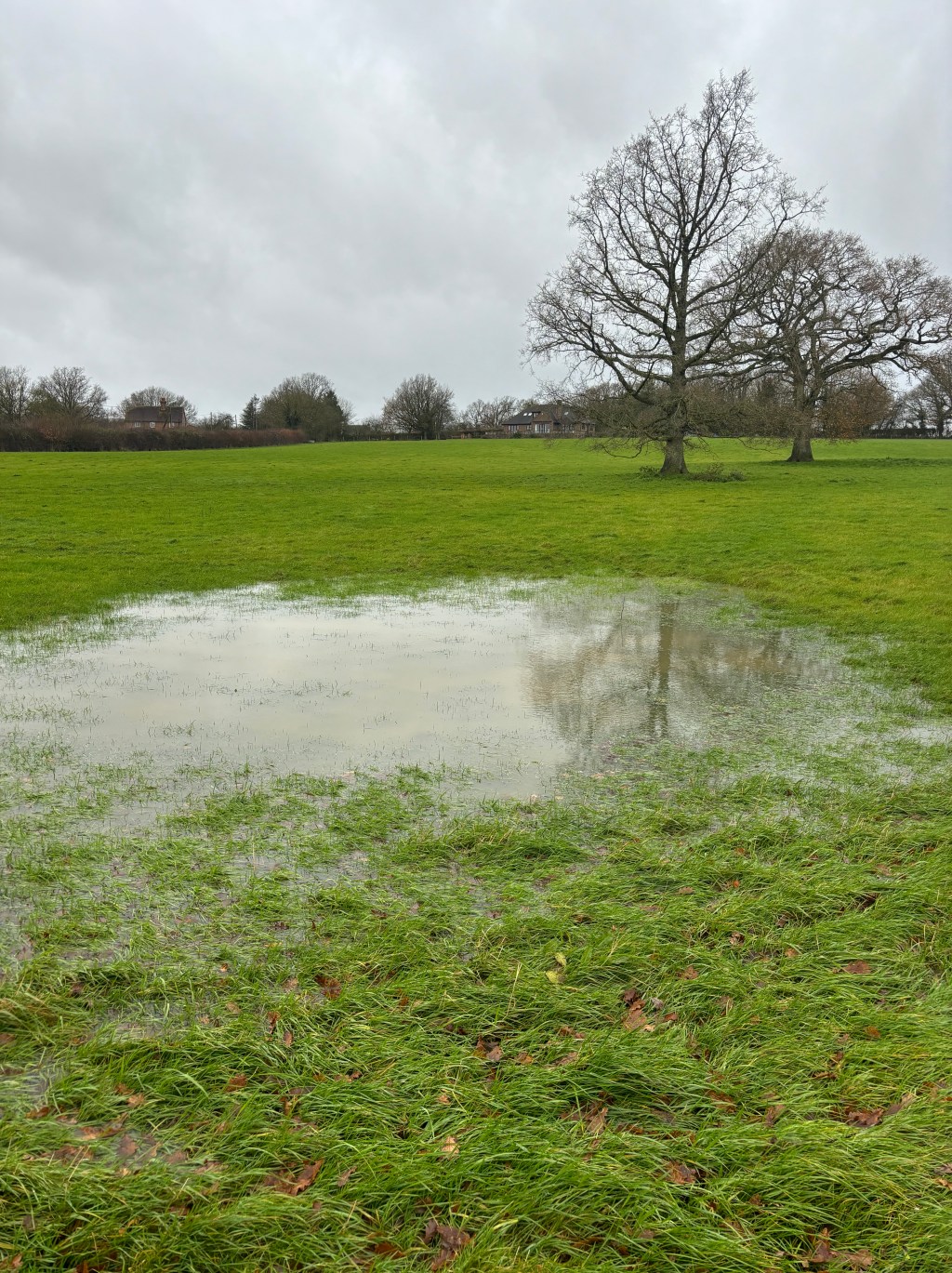
We thought we had completed the Habitat Management and Monitoring Plan (HMMP) this week, but following a tour of the field this afternoon we need to make a few further tweaks. The HMMP sets out the management regime that will realistically achieve the targeted habitat improvement. This is not just for our use, it is a legal document. It details a 30 year obligation for how we will manage the site which will become a contract with the Local Planning Authority. It is important, therefore, that the actions the HMMP details are achievable and there is a high chance that they will achieve the target habitat. Walking, and at times wading, about the field today it was clear that we have not fully reflected the characteristics of the land in our design.
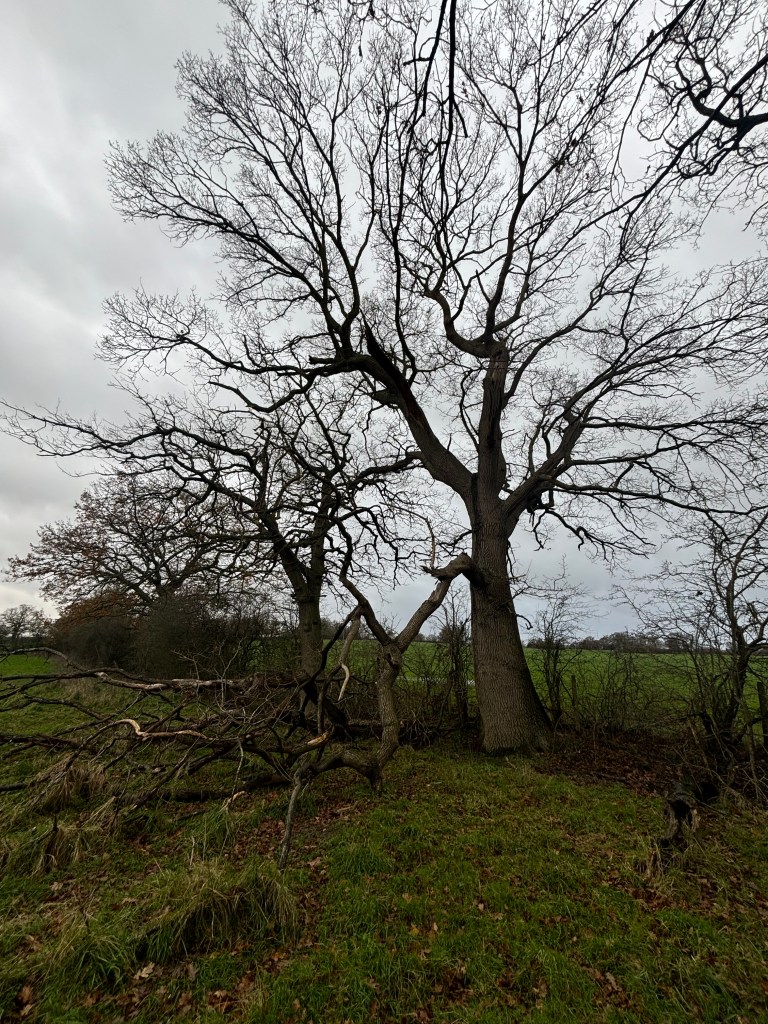
It matters that the HMMP is well written and achievable. As a legal contract, if we fail to carry out the actions or fail to deliver the specified improvements the Local Planning Authority has powers to step in, or require remedial action. If the HMMP is written too rigidly, then we risk failing to deliver it, even with our very best of intentions. For instance, if the plan sets out exactly where each tree will be, by specie and age, then if we lose a tree to a disease or a storm then we will be failing. We want to achieve the target habitat overall and do the right thing, but don’t want to suddenly find we have to bring a 30 year old tree to site and plant it at great expense. So, we are attempting to write the HMMP to allow for appropriate flexibility. Rather than specifying individual trees in precise locations, the HMMP details a range for the mix of species, their ages and the broad area they will be planted in. The risk of events changing the plan isn’t just theoretical. We have lost one of the larger hedgerow trees in Storm Bert as you can see in the picture below.
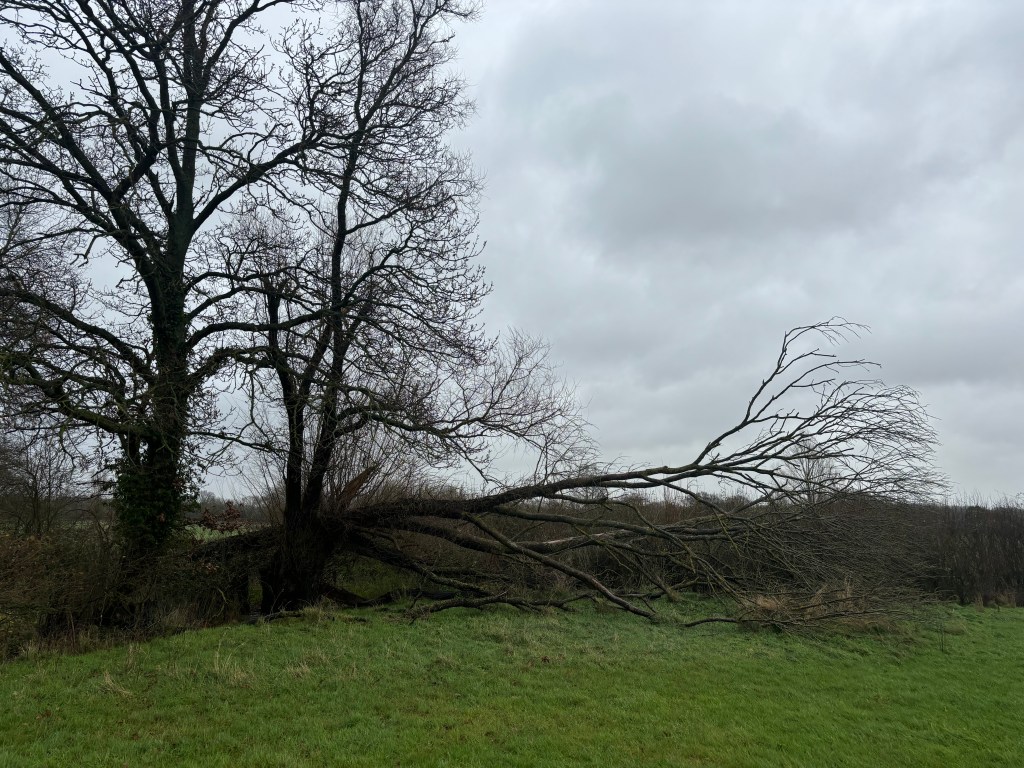
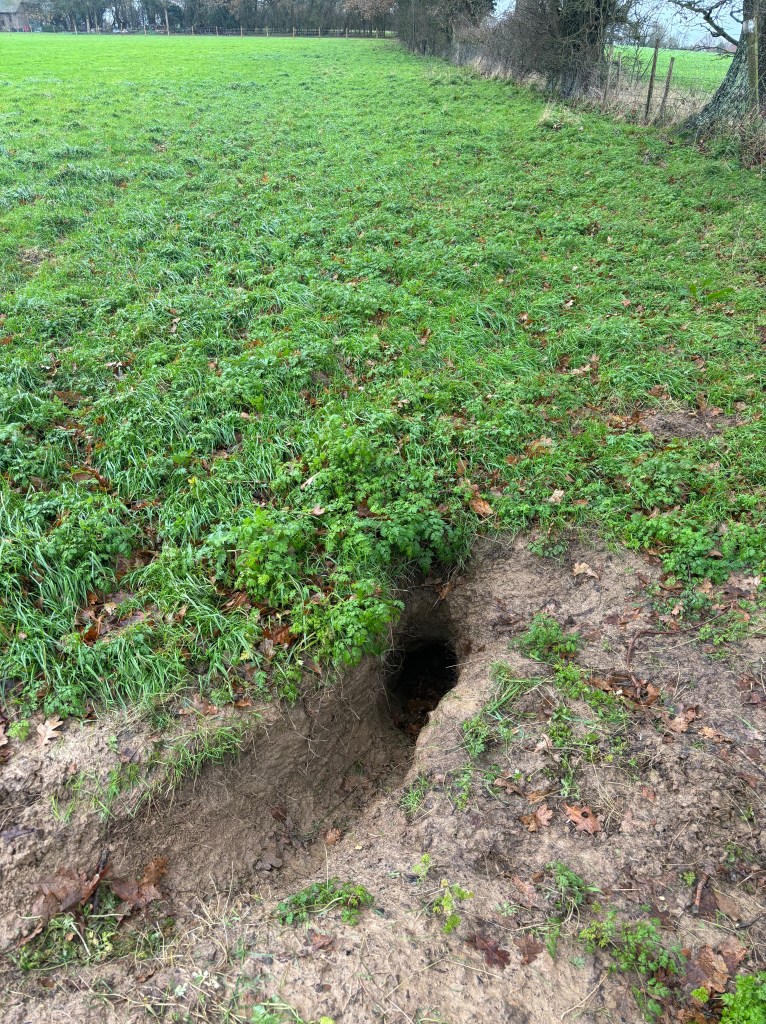
Another reason to retain flexibility is that falling trees or large branches coming down are opportunities to introduce a bit of ecological complexity. If the plan prescribes that this area is all meadow, then we need to come in and chop up this tree and take it away. But letting this tree lie, will provide a niche for a fungi and insects. It will also protection for self seeded scrub, protected from the browsing of local mammals. And we certainly have some mammals. We saw a couple of Roe deer, and also a new badger sett in the top area of the field, with plenty of badger tracks across the site and down to the stream.
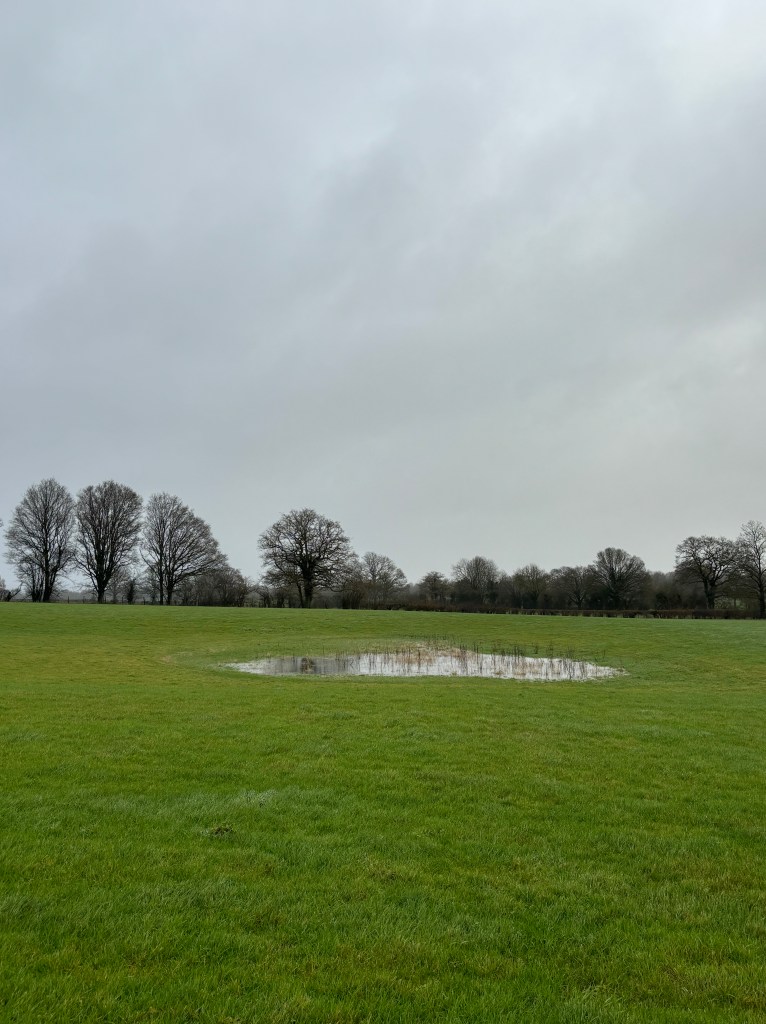
The walk also showed that we had not picked up in our initial surveys that there is a sizeable depression in the top field that acts as a natural pond in the wet weather. Our design has a new hedgerow running through the middle of this, which just won’t work. And it doesn’t make use of this natural landscape feature. It would be much better to work with the contours and make this a pond, deepening it and lining it with clay, and let go of the idea of adding more hedge at this point.
So, one last go round the HMMP. It will be better for it, better reflecting the characteristics of the land, more achievable and some more flexibility to allow us to capitalise on opportunities to create a varied and complex habitat.
 Abounded
Leave a reply to Updated baseline and planting preparations – Abounded Cancel reply